Malcolm Herring purchased the tired hotel in August 2000. It was by then a rather rundown and outdated hotel. Malcolm was fulfilling a long-held ambition of moving to Cornwall, as his ancestors were all Cornish, and a genealogist had traced them back to 1580.
He then spent three years overseeing a complete renovation and expansion that transformed the then ten bedroom hotel into a luxury six bedroom “Private Hotel”.
Two days after acquiring the building, there was knock on the door. An elderly gentleman announced himself as Robert Whitnall, and said he was 8 years old when his parents had the house built in 1922, and he and his sister liked to return every so often, as the house had many memories for them..
For the next three hours, Robert explained to Malcolm what life was like for him and his siblings at that time. It was so fascinating listening to him, and his words made the building come alive. He was able to provide so much of the early history of the building, and the lifestyle under the Whitnall’s ownership.
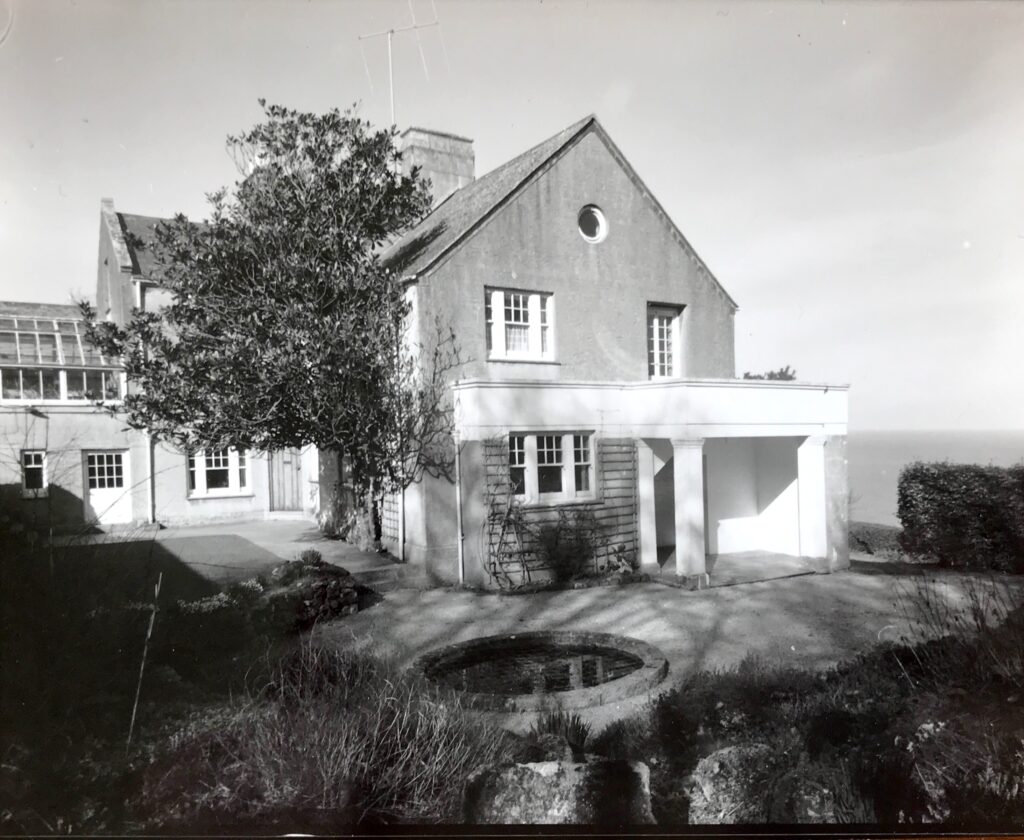
Blue Hayes was built in 1922 as a private residence for Professor Ernest Samuel Whitnall, an eminent anatomical surgeon of the time – his work on orbital anatomy resulted in two medical terms for a portion of the human eye being named after him: the Whitnall ligament and the Whitnall tubercle.
He was apparently a friend of Edward VIII, Prince of Wales, whilst he was at Magdalen College, Oxford, and with whom he often played tennis. At the time the house was built, the family had the services of a nanny, a cook and a chauffeur, all living in.
The name “Blue Hayes” was given to the building by Mrs Whitnall. Professor Whitnall and his family lived in Oxford, and they often travelled down to St Ives, prior to having the house built, and living there. According to the Professor’s daughter, Mary, (who died in 2010 aged 98), when her mother looked out across St Ives Bay from the new house, the large expanse of blue sea reminded her of the blue poppy fields she often saw when travelling through Devon to St Ives. An Old English word for ‘enclosed fields’ is “Hayes” – hence the name “Blue Hayes”.
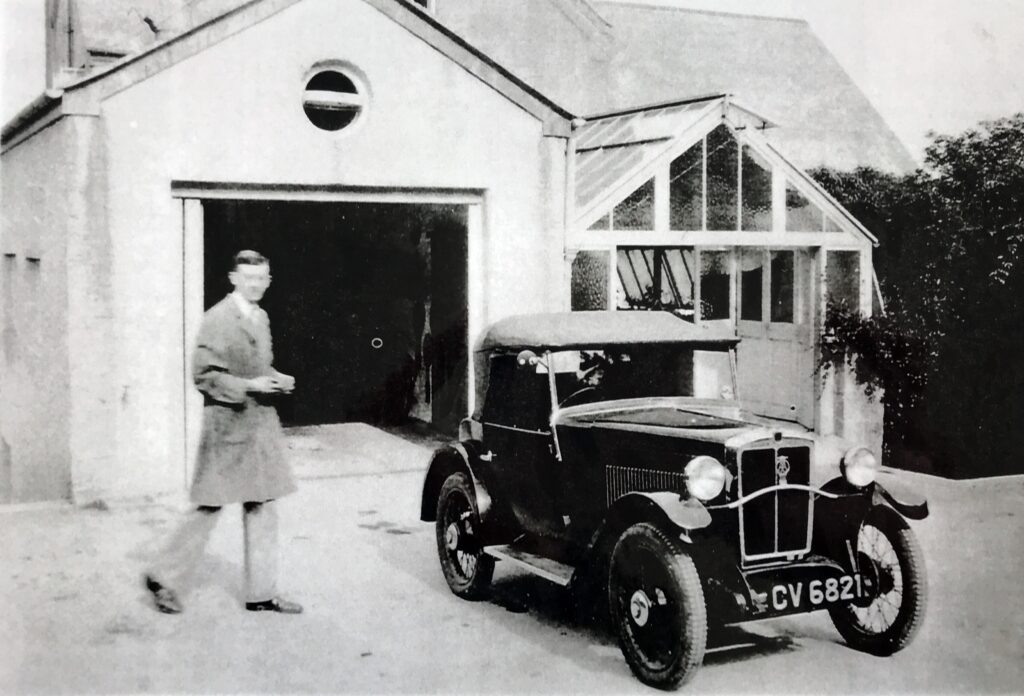
Another of Professor Whitnall’s great friends was William Morris, the maker of the Morris motor car, who was a regular visitor to Blue Hayes, taking two days to make the journey from Oxford. It is understood that each time he arrived, he complained that the journey was taking him longer, as “there were more cars on the road”!! Not surprising, when only 400 Morris cars were produced in 1919, but by 1925 the annual output was 56,000.
The eldest son, William, (above) had his own Morris motor.
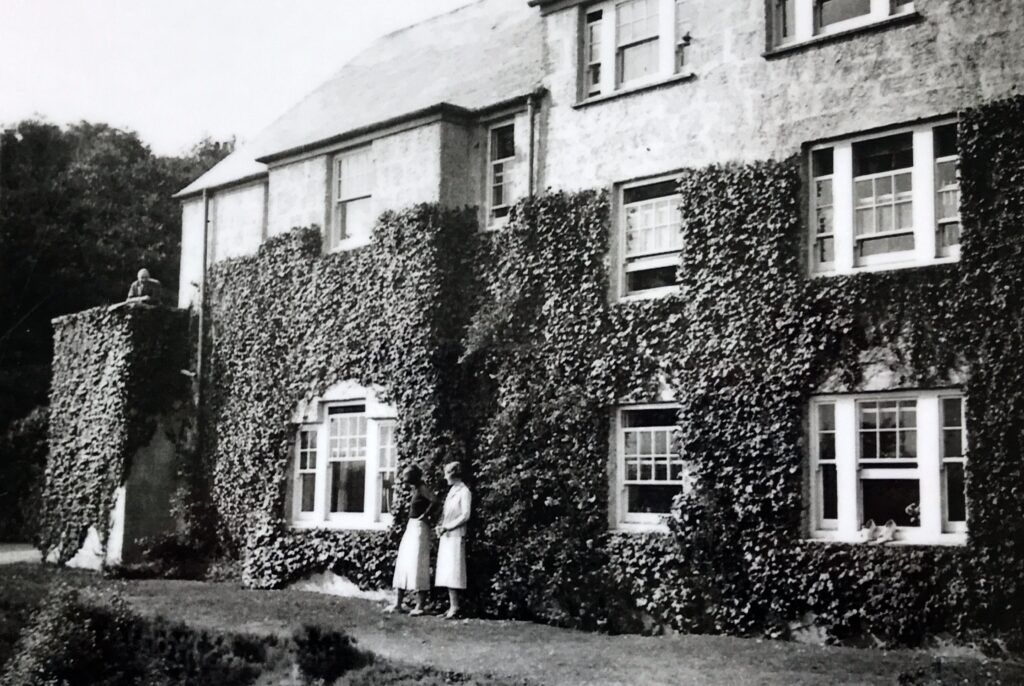
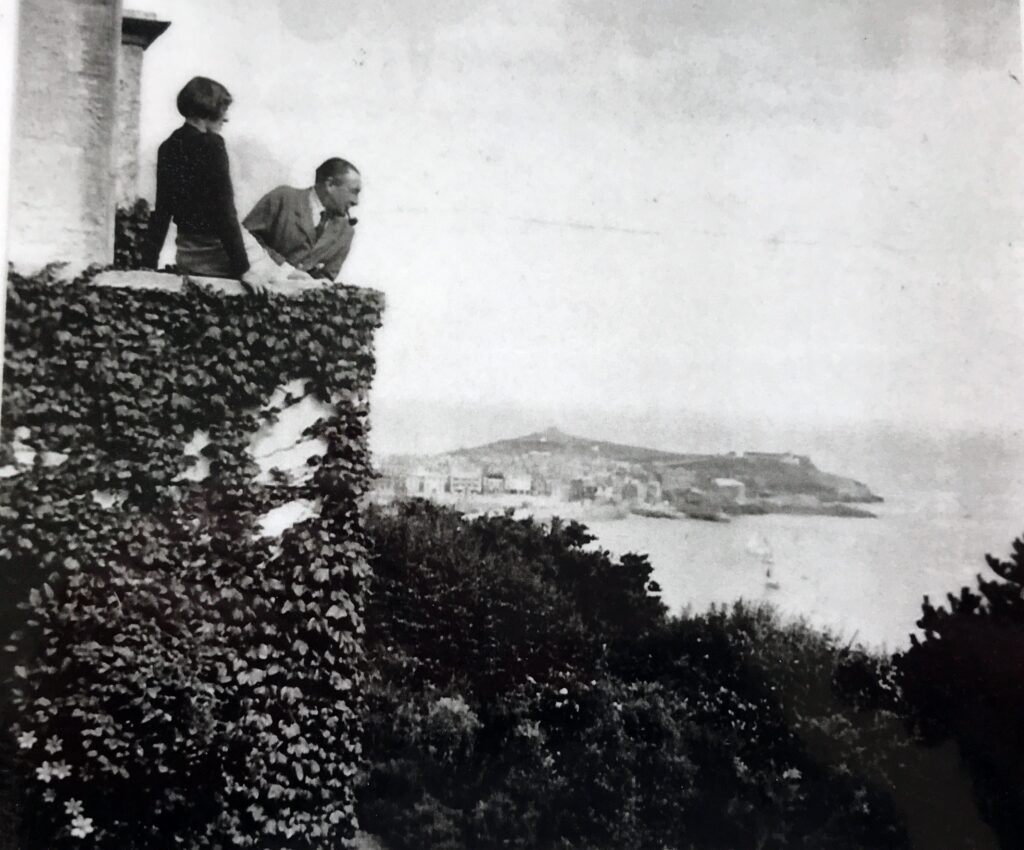
The above picture shows Mary with her mother, and the Professor on his balcony, and picture below shows Mary and the Professor on the balcony, and the view of St Ives harbour.
According to Robert, his parents purchased the land and had the house built at a total cost of around £5000. However, when the Whitnalls moved to Bristol in 1935, when Professor Whitnall became Professor of Anatomy at the University of Bristol, Blue Hayes was sold for just £2500.
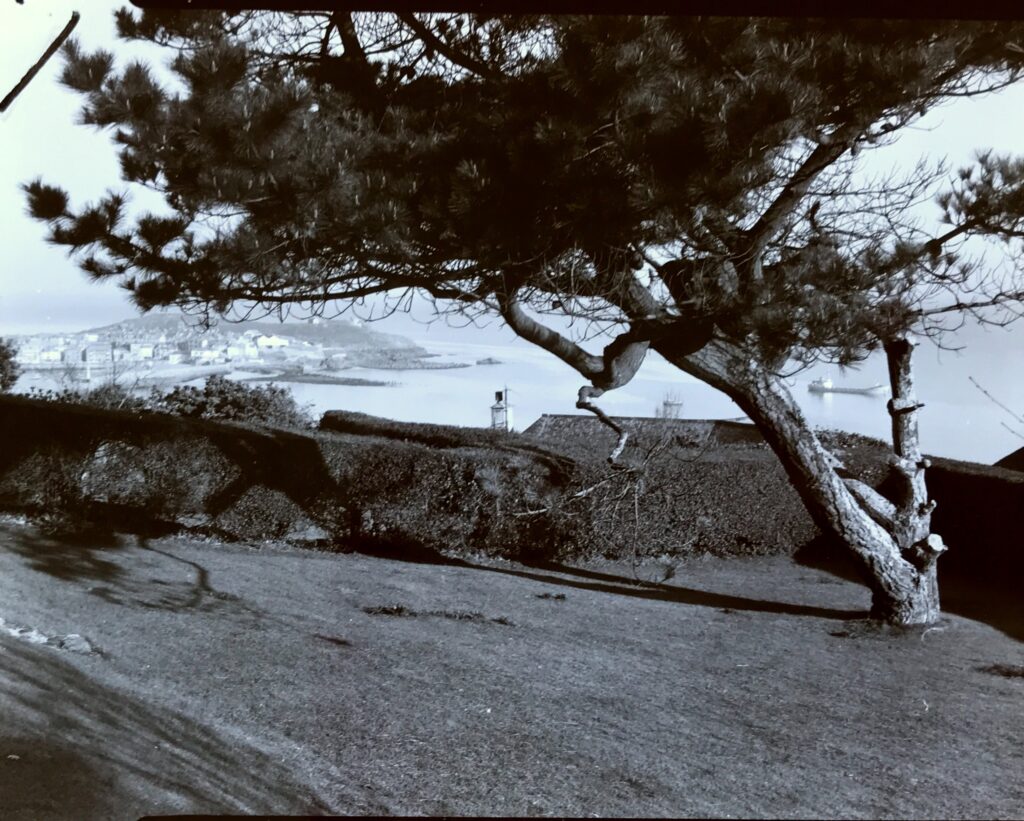
Cornwall is known for its mild climate, thanks to the Gulf stream, and many gardens were established and thrived between 1800 and 1910 in West Cornwall. It is believed that Mrs Whitnall planted the Monterey pine tree in the corner of the garden whilst the house was being built. Apparently, Monterey pine trees are extremely fast growing, gaining 6 feet a year in a mild and moist climate, and can reach 20 feet high in less than four years.
It is understood that the Monterey blew down in a storm in 1971, and continued to grow in the position you see it today. Some trimming took place in 2000, and from then the tree has shown healthy and thriving growth. Monterey pines typically live 80 to 100 years, but can reach up to 150 years in ideal, native conditions.
The children, Mary and Robert, spent the long summers in St Ives, and Robert recalled that they would often visit the farmhouse just below Blue Hayes, on Porthminster Point, to help with the milking of the cows and the making of the clotted cream. When it was getting near lunchtime, the children would keep an eye on the flagpole that towered above Blue Hayes, as Nanny would hoist the flag to signal that lunch was ready!
Robert was confirmed by the Bishop of Truro in 1930 and went on to study theology at Magdalen College, Oxford. Some years later he joined the monastic order the Community of the Resurrection in Mirfield, Yorkshire, and much of his life was spent as a missionary in Africa.
Following his visit in 2000, he continued to keep in touch, sending regular letters to us. When the building works were completed in 2003, we sent Robert large photos of the building, and he was delighted with the new look. He had these framed and hung in his room, as they constantly reminded him of his life in St Ives. Sadly he died in 2013, aged 99 – a wonderful gentleman.
The Whitnall family moved to Bristol in 1935 when the Professor was made Chair of Anatomy at the University of Bristol.
Over the thirty years from 1935, there were several owners of Blue Hayes, including the headmaster of the local school. In 1965, the owners at that time started taking in guests, and it became a small hotel with ten bedrooms.
By 2000, it had certainly become outdated. There was only one room with an en-suite facility, of sorts. All other guests had to stroll along the corridor to a communal toilet or bathroom!